Author: admin

  • Color, Noise and ISO 1600


    One of the reasons I choose the Canon XT over other camera manufacturers was because of the lower noise levels at higher ISO numbers. Reviews even said the noise levels were similar but with a different look to the more expensive Canon models.

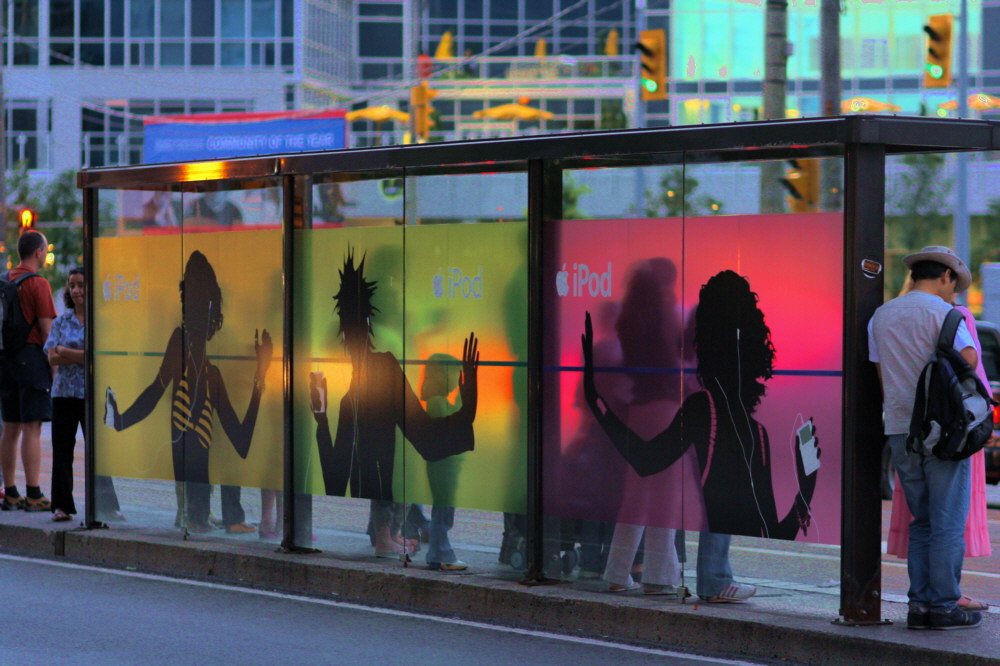
    After my return ferry ride from Sunday’s Wards Island trip I decided to take a few early evening shots with my 100mm f2.0 lens. To save the setup of the tripod and also because I had only used it a few times I set the ISO level to the maximum of 1600. In the picture above I was expecdting bright saturated colors but instead they were dull and slightly dirty in a way that could not be corrected with picture window pro (the software I normally use) so much so that I will have to go back and shoot it again with my tripod.
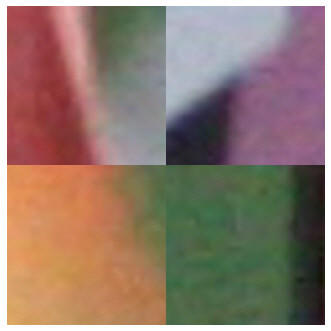
    This is a 4x zoom of 4 parts of the top photo: notice the blotchiness of the colors not only in color intensity but in the actual color value. I can attribute some of it to using jpeginstead of raw but I doubt that does much more then smooth out noise spikes. I find the noise more annoying then the graininess of film. Film has most of the noise is uniformly distributed spatially with the noise being primary intensity rather then in color value. Increasing ISO number does not for the most part increase the sensitivity of image sensor it is really only increasing the amplification. Electronic noise causing a lower signal to noise ratio is still the biggest hurdle preventing image sensors from reaching the dynamic range of film. More about color in a future post.

    Another Trolly Stop photo

    Because color is not so important to the subject matter in this photo I think ISO 1600 is not too bad here.
  • The Wrong End of the Stick


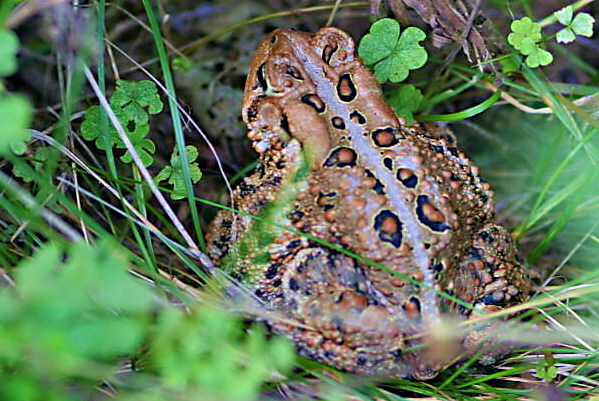
    You ask why would I show a picture of the backside of a toad. The answer is simple its the best photo I could get. The toad like most wild animals would rather be invisible when it comes to humankind. Rather then put the creature into shock by prodding with my camera lens, I choose not to disturb it, let it believe its camouflage was successfully concealing it.

  • Captured in Motion

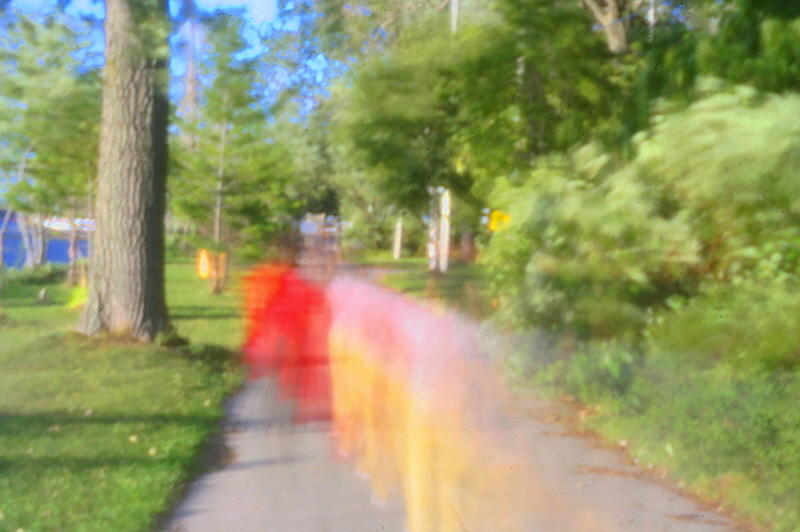
    This past Sunday I took the ferry over to Wards Island to take a few photos. One of my targets for the day was to capture the feeling of motion. Being of a scientific bent of mind. I asked myself the question: What gives a static photograph the impression of motion? As I am wont to do I will attempt to answer my own question by breaking down and classifying motion in photos into two classes. These two classes are not exclusive both could be combined in single photo. More of Sunday’s pictures.

    The first class is those photographs that show motion by having motion blur. While a normal photograph is a frozen moment in time. This type of photo has frozen not a single moment but several moments. The photo on the left is the first of my pinhole lens shots that I really like! It was taken at ISO 200 and with a 15 second exposure, it was also very windy so the bushs and tree branches were also in motion. I had to saturate the colors to make the path of the two bicyclists visible. I have subclassed this as a linear motion blur. Another example of linear blur is when the camera is panned to follow a high speed object such as a race car, in this case the race car is fixed in focus while the background has a linear blur.

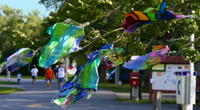
    The photo on the right was taken in a heavy gust of wind with my lens stopped right down to maximum and at ISO 100 for a 2 second exposure. This subclass of motion blur for lack of a better name I will call cyclic motion blur. Cyclic because the object when disturbed oscillates around its at rest point. For an instance at both extents of its travel it stops moving giving it the characteristic of a multiple exposure stop motion strobe effect.

    The next class I call perceptual motion. Our brain is hardwired through genetics and through life’s teachings that nature has laws; gravity pulls down an object, if an object is past it’s center of gravity it will fall over, water can’t be put in a pile… We know without thinking that the shirts in the picture are not static but are being blown by the wind. It is not in the nature of a shirt to hang in the way that the photo shows unless there is wind.

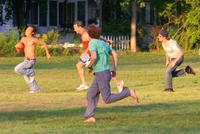
    Our mind tells us these people are running not standing still. If they were standing still they would be falling over.

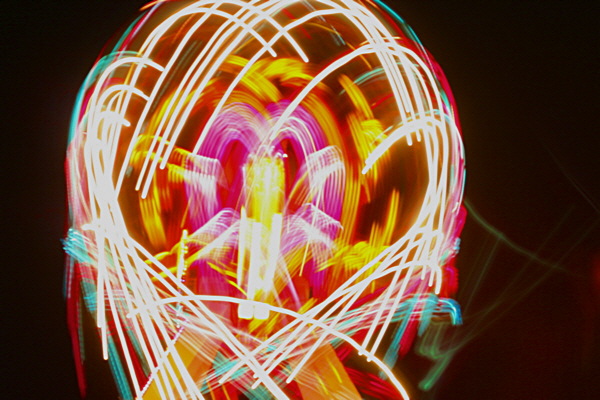
    This last example of the cyclic motion blur subclass was of an CNE ride at night.

  • Ignorance – Dynamic Range – Flash Fill In

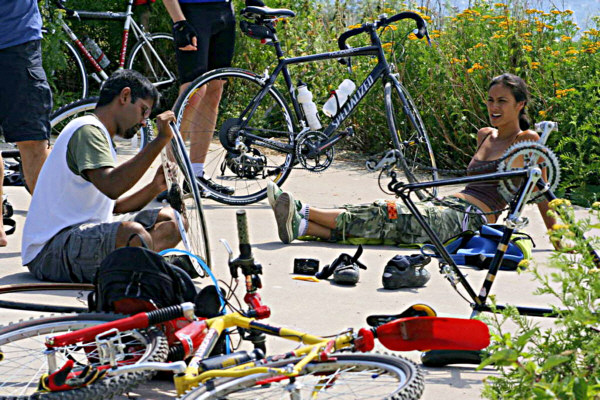
    I find one of the big differences of digital photography as compared to film is the reduced dynamic range of digital cameras. This image of a field bike repair was taken at the Leslie Spit. Notice the bright sunlight reflecting off the cement. I am not happy with the light and dark contrast in the above image.

    If the image is too bright to the point that one or more of the color channels are clipped/pegged at its maximum value (which is 1024 for the canon rebel xt). Then areas that are brighter then this max value will lose all of the details. The image on the left has had the brightness increased by 25%.

    On the other hand if the image is too dark then the dynamic range of image is reduced and fine detail is lost. Some of the detail can be brought back by digitally enhancing the image in a program like Photo Shop. This is especially true if you are working in raw mode. But fine detail is still lost and noise especially in the dark areas will be increasingly visible. There is a mathamatical basis beyond the scope of this post for this increase in noise and lose of detail.

    The answer to getting better contrast is simple but too late for this time around. It was pointed out to me after the fact that I should have used flash fill-in to bring out the dark areas. I knew about flash fill-in but always thought it was used in lower light situations. In general I stay away from using the flash as I usually get glare off a sweating nose or forehead, but in bright sunlight glare shouldn’t be a problem. Oh well another reason to buy a remote flash.

  • People

    One of my major goals in photography is to compose better travel pictures less like tourist snapshots. Looking back on the thousand or more travel pictures I have stored away in boxes I notice many of the scenic shots are quite impressive to my untrained eye but where are all the people? It might be because I am shy and don’t want to impose but I very rarely take photos of people.

    That has all changed once I joined the Toronto Photography Meetup Group (TPMG). At the TPMG events all the other members are a built in source of people who do not usually mind getting their pictures taken. I can already see improvements in my style and composition. Also I am no longer shy about imposing my camera on people in the street. Most of the time if I ask they are delighted, some are shy, some not.

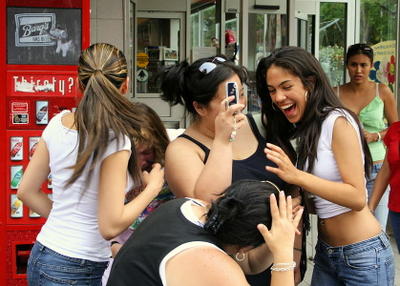
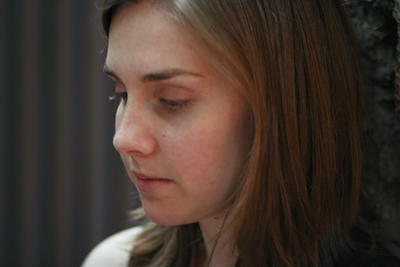
    This is one my earlier shots with my Rebel xt using the kit 18 – 55mm lens. I was lucky to catch the moment of realization that the video phone was not the only camera.

    This newer picture was taken at dinner at the Taste of Danforth event. It was shot after dusk without a flash in “natural” patio light with a wide open 100mm f2.0 prime lens ISO 800. I leaned the camera on the table to steady the shot. I am happy with the background composition; the transition from the fence on one side to the hair and to tree bark on the other side.

  • Furry Objects in the Mirror May Appear in Focus

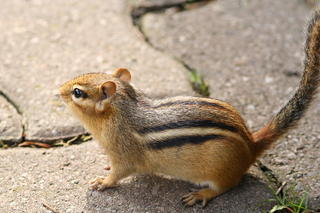
    After trying unsuccessfully to catch this little guy randomly scurrying about I relized my camera was in single shot mode and I had to release the button for each refocus. By the time I figured it out all I got was this shot minus a piece of tail. When taking pictures of furry animals I have not had much luck with the Canon autofocus function.

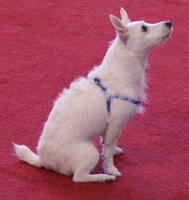
    At the Chin Picnic I took several out-of-focus shots at the dog show but only this one where the dog was sitting still turned out. Most of the time I have the camera on center spot focus, this may be a mistake as the fur is too fine to allow a focus lock.

    Ugh not another pet shot!
  • Edwards Gardens Texture Challenge

    The challenge this week for the Toronto Photography Meetup meetup was to try to capture texture. The location was Edwards Gardens, a semi-formal garden, wedding picture paradise. Texture, love nature and textures in nature equals fractals up close or far away should be easy.

    The rest of the pictures are here.

    I don’t own a macro lens, The closest lens I have is the Canon kit lens 18-55mm from 0.9 feet to infinity. Adequate but a bit slow in focusing and needs a fair amount of light. My first problem was getting in close enough, the focus motor kept hunting. I had to change to manual focus and set the lens at minimum focus distance. To focus I moved in or out till the image in the Canon’s tiny view screen seemed to be with my poor eyesight in focus. The next problem was the slight wind, with a depth of field of about 1/4″ any swaying will put the object out of focus.

    This shot was easy, but had to watch for saturation in the red. I like the way the last of the raindrops from the days rain beads up on the pedals.

    Any way add a close up lens or a lens extension or a macro lens to my ever growing shopping list.

    I brought my first Tripod for my pinhole camera experiments. I don’t count my dirt cheap terrible to use mini-table top tripod as a real tripod. I brought a Velbon Sherpa 250.

    Pluses are:

    • it is mostly metal
    • sturdy 3 – section legs
    • camera quick release
    • really like the smoothness of the head
    • The head can be mounted on the bottom of the tripod allowing some low angle to the ground shots
    • locking lever locks both rotational axis at the same time
    • aprox. $100 cdn

    Neutral:

    • weight 2kg
    • closed length 60 cm
    • it dosn’t have a handle or a carrying bag (The carrying bag from one of my cheap walmart folding chairs works perfectly)

    As this my first tripod I am not the person to go for camera equipment reccomendations. But one of the photographers tryed it out, liked it and wrote down the part number.

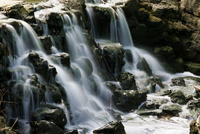
    Anyway back to the shoot. I used the tripod to take my first long exposure shot of moving water. As my lens only stops down to f22 it wasn’t that long of a time. I find out that I need another filter, a neutral density filter ND for short. While I am at it I should add a polarizing filter or two to the shopping list.

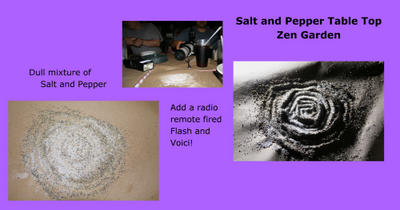
    At the prerequisite preshoot 2 hour lunch. I thought it would be interesting to make a salt and pepper, zen garden texture shot, to get a headstart on the challenge. After labouriously designing and building the garden using a fork and a swizzle stick as a rake the picture were less the then interesting. That is until a radio remote fired flash was but onto the table. So add a remote firing flash to the list.

    Shopping wish list as a result of this outing:

    • close up lens or a lens extension or a macro lens
    • neutral density and polarising filters (for how many lenses as each Canon lense seems to need a different size
    • radio remote fired flash
  • Canon Rebel XT as a Pinhole Camera

    Canon Rebel XT as a Pinhole Camera


    Why make a pinhole lense for a digital camera? Because I can. There is something interesting about adding the most simple primative glassless lense to one of the most complicated technologies.

    More pictures and construction instructions.

    Why can’t I get this d&*m online spell checker to work?

  • Taste of Danforth Photo Challenge

    The challenge was to shoot the whole day using only a single prime lense. My weapon of choice was my 100mm f2.0 Canon lense.

    The original Danforth was all about a Greek Neighbourhood, women dressed in black on the front porch crying, mourning the death of a family member. Fruit Markets the only stores in Toronto open 24 hours 364 days a year (closed for Christmas). Times have changed Asians for the most cases have taken over the fruit stores, now open more conservative hours. Many greek restaurants have moved up market greek cusine. The Danforth has become a stylish place to live. Many of the greek people have sold there houses replaced by the multi-cultural mix that is Toronto today.

    More photos
    Some of the more interesting photographs were taken after dusk using the camera handheld with no flash at ISO 800.

  • Kensington Market Pedestrian Sundays


    A few times a year the Kensington Market closes its streets to motor vehicles. As far as I am concerned this should be a permanent change. Normally the streets are so crowded that pedestrians and vehicles move at the same speed.

    Kensington Market Photo Shoot